
Introduction
Managing your diet can be challenging, especially when you have diabetes or kidney disease. Did you know that nearly 1 in 3 people with diabetes also develop kidney disease? What you eat, especially when it comes to packaged food, plays a big role in keeping both conditions under control. Nutrition labels on packaged foods can help you make smarter choices, but they can be confusing. In this blog, we’ll simplify how to read these labels and give you tips for choosing healthier packaged food options, whether you’re managing a health condition or just want to eat better.
How to Read Packaged Food Labels
Serving Size
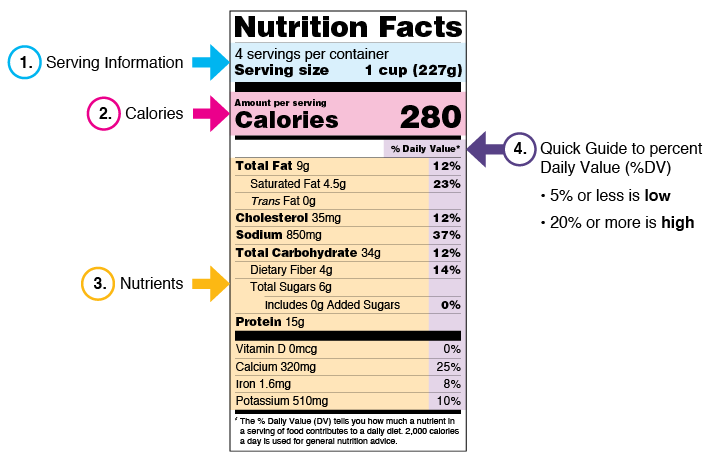
Start by looking at the serving size on the packaged food label. All the nutrition information on the label is based on this amount. If you eat more or less than the serving size, you’ll need to adjust the numbers.
Calories
The amount of energy you get from a serving of food is shown by calories. You’ll find the calorie count are at the top of the packaged food label in bold. To manage your energy levels, talk to your dietitian to find out how many calories you need per day.
Total Carbohydrates and Sugars
Carbohydrates are your body’s main source of energy. They include sugars and starches. If you have diabetes, it’s important to watch your carbohydrate intake because too many carbohydrates can raise your blood sugar. Added sugars, like high-fructose corn syrup or honey, can make your blood sugar spike, so try to limit them. If you have diabetes, talk to your dietitian to figure out the right amount of carbohydrates for you.
Sodium
Sodium, or salt can raise your blood pressure and strain your kidneys. Look for low-sodium options with 140 mg of sodium or less per serving. Eating too much sodium can make kidney disease worse.
Protein
Protein helps build and repair your body, and it keeps you feeling full. However, if you have kidney disease, too much protein can put extra stress on your kidneys. It’s important to talk to your dietitian for a personalized plan on how much protein you need.
Phosphorus and Potassium
These minerals are important for your health but if you have kidney disease, you need to be careful. Packaged food often contains phosphorus and potassium additives that can be absorbed more easily by your body, which can strain your kidneys.

Why Packaged Food Can Be Tricky
Packaged foods often contain hidden sugars, sodium, and other additives. For example, sugars can go by many names, like maltose or dextrose, which can raise blood sugar levels. Sodium can hide under names like sodium bicarbonate or monosodium glutamate (MSG).
Sometimes, low-sodium products replace sodium and potassium, which might seem healthier. We need potassium and phosphorus in our diet, but it’s important to avoid excess additives. These potassium additives can be labeled as “potassium chloride,” “potassium citrate,” or “potassium phosphate.” Phosphorus is often added to packaged foods like processed meats, sodas, and baked goods. On labels, look out for ingredients with “phos” in the word.
Terms like “diabetes-friendly”,“sugar free” and “low sodium”can be confusing. Here’s a quick guide:
Diabetes-Friendly
May be lower in carbohydrates and sugars, but always check the label.
Sugar-Free
Contains less than 0.5 g of sugar per serving, but may contain sugar alcohols, which can still affect blood sugar levels.Sugar-free does not mean carb-free.
Names of sugar or sugar alternatives fond on packaged food labels:
- Agave
- Brown Sugar
- Cane Juice
- Cane Sugar
- Coconut Sugar
- Confectioner’s Powdered Sugar
- Corn Syrup
- Corn Syrup Solids
- Dextrose
- Fructose
- Fruit Nectar
- Glucose
- High-Fructose Corn Syrup
- Honey
- Invert Sugar
- Lactose
- Malt Syrup
- Maltose
- Maple Syrup
- Molasses
- Nectar
- Pancake Syrup
- Raw Sugar
- Sucrose
- Sugar
- White Granulated Sugar
Sodium

Smart Packaged Food Choices
Best Options for Everyone
Look for whole-grain products with minimal added sugars. In the ingredients list pay attention to what’s listed and look for words such as whole wheat or whole grain flour, oatmeal, brown rice, barley, buckwheat, and quinoa.
Kidney-Friendly Packaged Food
Choose packaged foods labeled as “low sodium” or “no added salt.” Some good choices include unsalted nuts, rice cakes, and pasta made from whole grains. Remember to also check the ingredients list for added potassium and/or phosphate labels.

Combine Packaged Food with Fresh Food
Whenever possible, pair packaged foods with fresh fruits and vegetables to create a balanced meal. For example, add fresh veggies to a low-sodium soup or pair a handful of nuts with a piece of fruit.
Conclusion
Understanding nutrition labels is a powerful tool in making healthier packaged food choices. Look for hidden sugars, sodium, and other additives, and make small changes like choosing a low-sodium version or a brand with less sugar. These small steps can make a big difference in your health.
This post was written by Sabrina Hartmann, Dietetic Intern, while she was completing her outpatient rotation. This post was reviewed and edited by Edith Yang, RD, CSR, CLT, FAND.
References
- https://www.fda.gov/food/nutrition-facts-label/how-understand-and-use-nutrition-facts-label
- https://www.eatright.org/health/wellness/nutrition-panels-and-food-labels/the-basics-of-the-nutrition-facts-label
- https://www.kidney.org/kidney-topics/your-guide-to-new-and-improved-nutrition-facts-label
- https://www.cdc.gov/salt/about/index.html
- https://www.fda.gov/food/nutrition-facts-label/added-sugars-nutrition-facts-label
- https://www.myfearlesskitchen.com/whole-grain-bread/
- https://www.parkview.com/blog/tips-for-limiting-sodium-in-your-diet
- https://www.fda.gov/food/nutrition-education-resources-materials/sodium-your-diet